A behavioral consulting firm that installs the operating system behind organizations of excellence
Org Excel is a consulting firm with roots in Applied Behavior Analysis (ABA) and the Autism Service industry. We specialize in ABA therapy practices and also partner with mission-driven organizations and nonprofits. Across all three, the pattern is the same: excellent at the work, but fragile in the systems that run it. We install a proprietary operating framework, grounded in Organizational Behavior Management (OBM) and Behavioral Systems Analysis (BSA), so the organization can grow without the founder holding it all together. I
The Problem
Founders are trained in the work they deliver. Few are trained to run the organization that delivers it.
Founders of ABA practices, nonprofits, and mission-driven organizations build deep expertise in their craft, whether that is clinical care, community programs, or a cause they have spent years advancing. The work of running the organization (hiring systems, supervisory cadence, financial discipline, and standards across sites and programs) was rarely part of that training. Founders learn it on the job or carry the gap, and the size of the organization gets capped at the size of the founder’s bandwidth.
The Market
The workforce gap runs through every sector we serve.
In ABA, the Behavior Analyst Certification Board, in partnership with the labor market data firm Lightcast, reported 132,307 BCBA job postings in 2025 against 81,566 active Board Certified Behavior Analysts, a gap of roughly 50,000 positions. Direct care turnover sits at an industry-average 85 percent, with total turnover cost across the field exceeding 5 billion dollars annually.
Nonprofits show the same strain. The Urban Institute’s National Survey of Nonprofit Trends and Impacts found that in 2025, 46 percent of staffed nonprofits had employee vacancies and 72 percent reported that vacancies hurt their ability to pursue their missions. The share of nonprofit leaders naming staff burnout as their top concern doubled from 2024 to 2025.
Founder-led, mission-driven businesses face the same pressure. In EY’s Fall 2025 Entrepreneur Ecosystem Barometer, 40 percent of entrepreneurs named hiring qualified, highly skilled talent as a major hurdle, and 39 percent pointed to employee and leadership wellbeing, including burnout and fatigue among leaders.
Sources: BACB & Lightcast, 2025 · CentralReach, 2025 · Urban Institute, 2025 · EY, 2025
Founders who built excellent organizations are competing in an environment that rewards operational infrastructure they were rarely trained to build. When the people who deliver the work are this hard to find and keep, the systems that develop and retain them become part of the work itself.
Inside the Framework
Grounded in behavioral science.
Built on Organizational Behavior Management (OBM) and Behavioral Systems Analysis (BSA), the two areas of behavioral science directly concerned with how organizations and the work inside them are structured.
The framework organizes the operations of a healthy organization across eleven behavioral domains in four clusters, with observable indicators across four developmental stages: Foundation, Growth, Scale, and Optimize.
The full architecture is documented in the foundational white paper, Building Organizational Excellence: A Behavioral Systems Approach for ABA Practice Owners, drawing on six years of doctoral research and on decades of practice ownership in the autism field.
Operationalized inside an organization, the science of behavior produces excellence that lives in the system rather than only in the people running it, and that holds across leadership transitions, growth phases, and the pressures of running a mission-driven business.
Mission-driven organizations deserve the same operational rigor they bring to the people they serve.
Where Org Excel Meets an Organization
Four moments in an organization’s development require different work.
Foundation
When the founder holds every operational decision, finances run on month-to-month cash management, and staff turnover threatens continuity of service, growth becomes the thing that breaks the organization. We install the workforce systems, financial discipline, service delivery standards, and supervisory infrastructure that carry the operational load.
Growth
When an organization adds sites, staff, programs, or service lines faster than its infrastructure can support, quality slips and the founder absorbs the gap. We install hiring governance, a key performance indicator (KPI) review cadence, multi-site operations, and the leadership development that produces the next layer of supervisors.
Scale
When a multi-site organization has grown past what informal workarounds can hold, the founder becomes the only connection point between sites, functions, and leaders. We install succession planning, capacity forecasting, cross-functional workflow design, and the leadership depth that lets the founder step out of daily operations while the organization keeps growing.
Optimize
When a mature organization has built the systems but the work of running it still consolidates at the top, the founder stays in the operating role longer than they intend. We install continuous improvement infrastructure, leadership mastery through the Applied Behavioral Leadership Framework, and the operational depth to meet both the mission and the organization’s goals on the founder’s terms.
The throughline across all four is choice. A founder who built an excellent organization should be the one deciding what comes next, whether that means growing it, preparing it for a successor or a sale, or building something smaller and sustainable that lasts without the burnout.
Right now, for most founders, the organization is making that choice by demanding everything they have just to keep running. Org Excel exists to give that choice back.
The Architect
Denise Freeman DeCandia
PhD (Org Development & Leadership), BCBA, LBA
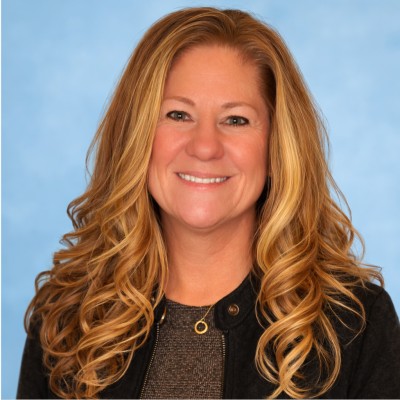
Org Excel was founded by Denise Freeman DeCandia, PhD (Organizational Development & Leadership), BCBA, LBA. Denise has worked in autism care since 1995, beginning as a direct service provider, earning her Board Certified assistant Behavior Analyst (BCaBA) and then her Board Certified Behavior Analyst (BCBA) credentials, and founding her own ABA practice in 2006. She grew the practice over the next two decades into a multi-site organization.
While building the practice, she observed a pattern she could not unsee. Clinical organizations in the autism field were running their clinical work on rigorous, evidence-based science and their organizations on instinct. The same reinforcement principles the field used with clients were rarely applied to staff development, supervisory practice, or organizational design. She returned to school for her doctorate to study that gap and spent six years researching what makes mission-driven organizations grow without burning out the people leading them. That research, alongside two decades of practice ownership, became the Org Excel operating framework.
The framework is the one she needed and could not find. She built it because the founders coming up behind her deserve a path through this work that does not require nearly three decades to find.
Company
Contact Us
© Copyright 2026. Org Excel. All Rights Reserved.